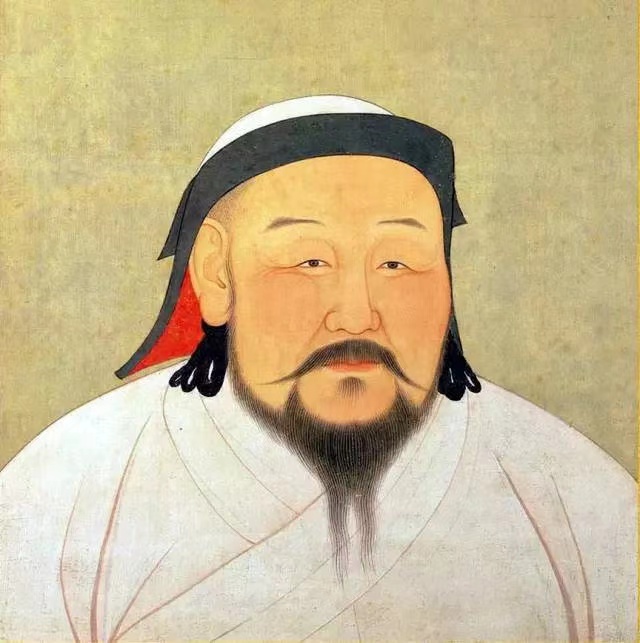
Kublai Khan
忽必烈
- 分类: 历史脉络
- ID: 1872478391218499584
Home CategoryHistoryKublai KhanPlay3.5 minsKublai Khan, born in 1215, was Genghis Khan's grandson and the founder of China's Yuan Dynasty, he was raised in nomadic warrior culture.ShareCatalogue1. Early Life and Rise to Power2. Establishment of the Yuan Dynasty3. Capital and Cultural Contributions4. Economic and Administrative Policies5. Legacy and Impact
Early Life and Rise to Power
Kublai Khan, born in 1215, was the grandson of Genghis Khan, the founder of the Mongol Empire. He was the fifth Khagan (Great Khan) of the Mongol Empire and the founder of the Yuan Dynasty (1271-1368) in China. Kublai was raised in a nomadic clan environment and was rigorously trained in the traditional Mongol warrior culture. His early exposure to governance and military tactics prepared him for future leadership roles within the expanding Mongol Empire. In 1260, he was declared the Great Khan, a title that he inherited after the death of his brother, the previous Great Khan, Möngke.
Establishment of the Yuan Dynasty
Kublai Khan is best known for founding the Yuan Dynasty in China, which lasted from 1271 to 1368. As a ruler, Kublai was deeply interested in Chinese culture and governance and sought to integrate Mongol and Chinese systems. His reign marked a significant period of cultural and economic exchange, as he established a centralized government that embraced Confucian principles. Under his leadership, the capital was moved to present-day Beijing (then known as Dadu), reflecting his ambition to consolidate his rule by adopting elements of Chinese administration and cultural practices.
Capital and Cultural Contributions
Kublai Khan's establishment of the Yuan Dynasty marked a period of prosperity and cultural fusion. His summer capital, Xanadu, was a symbol of this blend of cultures, designed by his Chinese advisor Liu Bingzhong in accordance with traditional feng shui principles. Xanadu, now recognized as a UNESCO World Heritage Site, included palaces, temples, and gardens that exemplified the synthesis of Mongolian and Han Chinese aesthetics. The city was a testament to Kublai Khan's vision of a harmonious empire where diverse cultures could coexist.
Economic and Administrative Policies
Kublai Khan implemented significant administrative reforms, including the division of his empire into provinces overseen by governors who reported directly to him. He encouraged trade and communication across the empire by enhancing the Silk Road and establishing postal stations. Under his rule, the Grand Canal was extended, facilitating trade between northern and southern China. His policies promoted economic growth and stability, but also led to increased taxation, which eventually became a source of discontent among the population.
Legacy and Impact
Kublai Khan's legacy is marked by his efforts to unify China under Mongol rule, bridging the gap between the nomadic Mongolian and sedentary Chinese civilizations. His patronage of the arts and support for religious tolerance contributed to a rich cultural legacy that transcended ethnic divisions. However, the Mongol dominance was challenged by internal dissent and external rebellion, leading to the eventual fall of the Yuan Dynasty shortly after his death in 1294. Despite this, Kublai Khan's era is remembered as a time of unprecedented cultural and economic exchange and as a pivotal period in the history of China and the Mongol Empire. Article reference1. Saga of the Grand Canal: Masterminds of milestones. chinaservicesinfo.com. 20212. Site of Xanadu. chinaservicesinfo.com. 20183. ‘Marco Polo’ opera impresses, enlightens. chinadaily.com.cn. 2018Photo Gallery(2 pictures)CategoriesHistoryTagAncient Chinese HistoryHistorical FiguresRelatedSakya MonasteryGenghis KhanMarco PoloMongolian Ethnic GroupCatalogue1. Early Life and Rise to Power2. Establishment of the Yuan Dynasty3. Capital and Cultural Contributions4. Economic and Administrative Policies5. Legacy and Impact- - - []








